Designing for pets begins with how they move, rest and live alongside us. In Singapore homes, the most thoughtful solutions are often practical and beautifully woven into daily life.
Top image: Design by Studio Luuseed
It used to be that designing for pets meant finding a corner for the food bowl and hoping the sofa survived. That has changed. The number of dog licences in Singapore rose from about 70,000 in 2019 to about 87,000 in 2022, while a landmark 2024 policy change allowed cats in HDB flats from 1 September 2024, reversing a decades-long ban. As pets become a more visible and permanent part of home life, homeowners are beginning to approach renovation with their animals in mind.
The good news: the best pet-friendly homes don’t look like pet homes. They look like well-designed spaces where every occupant has been considered from the start.
Start with the floor plan
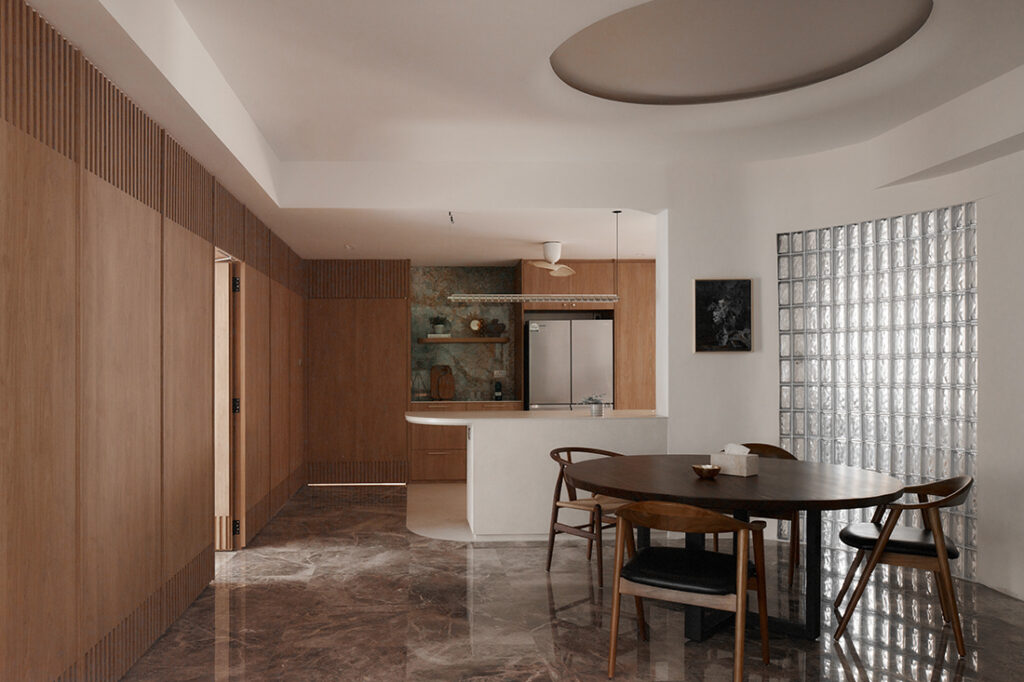
The most impactful pet-friendly decisions happen at the layout stage, not after the carpentry is done. Open-concept living gives dogs room to roam and lets cat owners maintain sightlines across the flat. But openness on its own isn’t a plan. Pets also benefit from defined zones — a quiet nook for napping, a sunny perch for observing, a corner they can retreat to when the household gets busy. The key is designing these into the home’s spatial logic from the outset, so they read as architecture rather than pet furniture. If you’re working with a designer, share how your pet actually moves through the day — where they sleep, where they station themselves when you’re cooking, how they react to guests — because that’s the brief that shapes a layout.
Choose materials that earn their keep
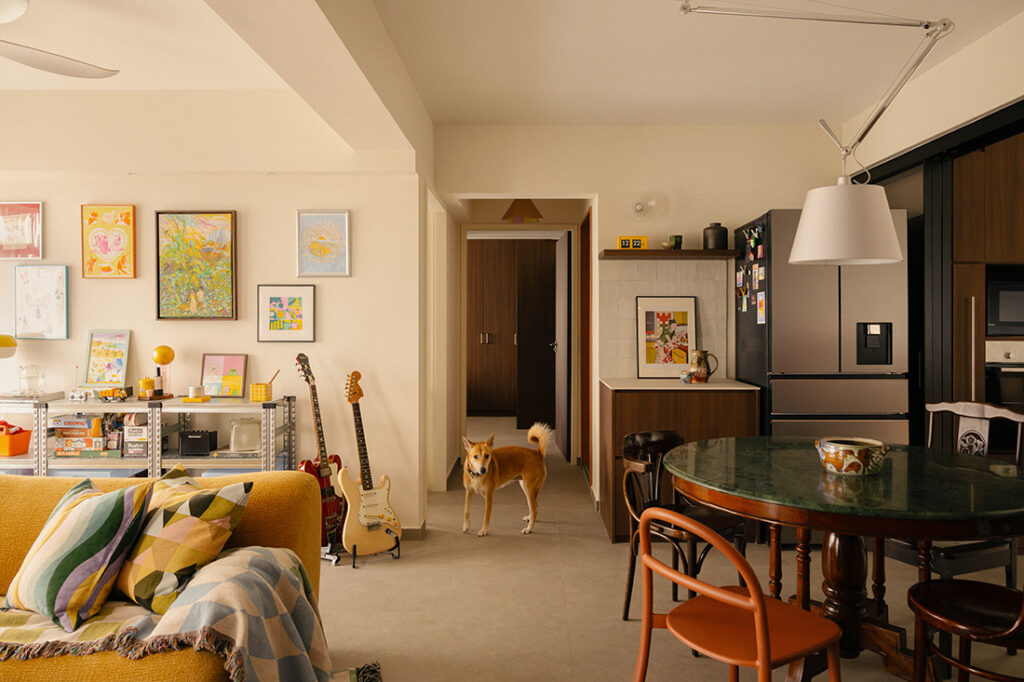
Flooring is where most pet owners feel the tension between aesthetics and practicality, but the gap is narrower than it used to be. Matte-finish textured tiles offer grip for paw pads without looking clinical — important for dogs, who can struggle on polished surfaces, especially as they age. Vinyl planks handle scratches and humidity well and are easy to clean. Anti-scratch laminates on cabinetry mean climbing surfaces for cats can be built into your carpentry without showing claw marks within months. For sofas and cushions, performance fabrics and leather alternatives resist staining and pet hair far better than loose weaves.
Plan for the unglamorous parts
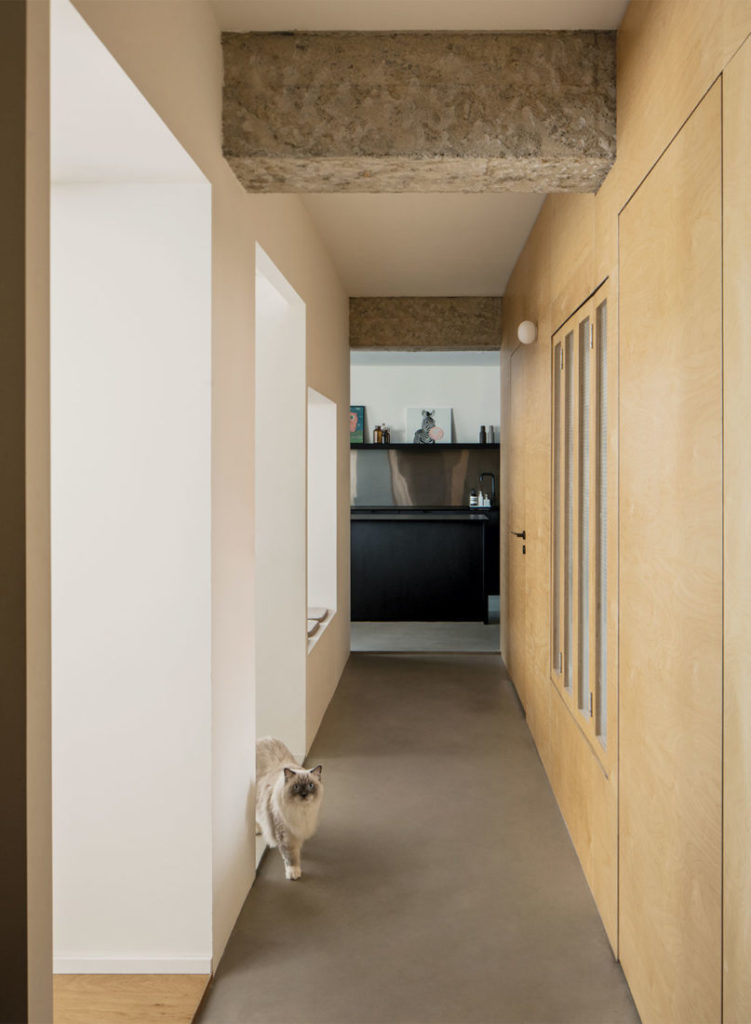
A dedicated pet wash — in the kitchen, service yard or near the entrance — saves the family bathroom from double duty. Built-in storage near the front door keeps leashes, grooming supplies and paw-cleaning towels out of sight but within reach. For cat owners, litter tray placement matters more than you might expect: a ventilated cabinet near the service yard manages odour without banishing the tray somewhere your cat may refuse to use.
Safety deserves its own line item. Mesh screens or secure grilles on windows and balconies are non-negotiable in high-rise living. Check that balcony railings don’t have gaps wide enough for a small dog to squeeze through. And if you’re choosing indoor plants, verify they’re non-toxic to your specific pet — several popular houseplants are harmful to cats and dogs if ingested.
Homes that get it right
A staircase, a bathtub and a home shaped by cats
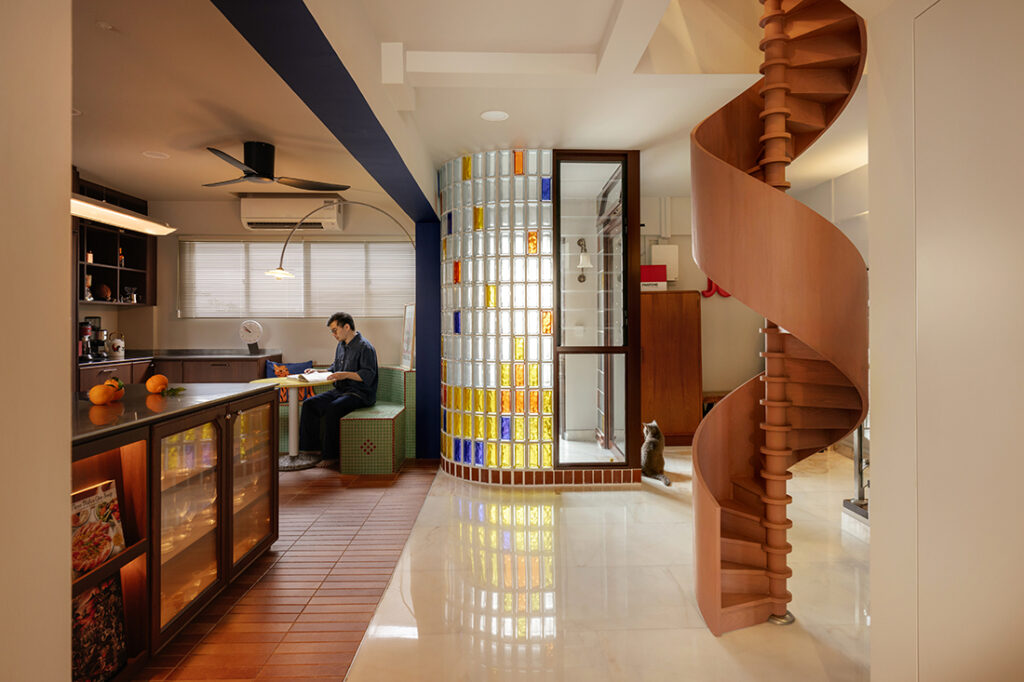
In this Towner Road HDB maisonette, Studio Luuseed designed everything around the homeowners’ cats — their climbing habits, resting spots and daily routines. A sculptural spiral staircase in soft pink gives the cats their own route through the home. A claw-machine-inspired display cabinet incorporates a cat nook below. And in the master ensuite, a custom stone-clad mini bathtub was built specifically for the cats, sitting alongside warm terracotta finishes that feel more resort than utility. “They were keen for the cats’ needs to be thoughtfully integrated, not as standalone pet features but as natural extensions of the home,” says designer Claire Goh.
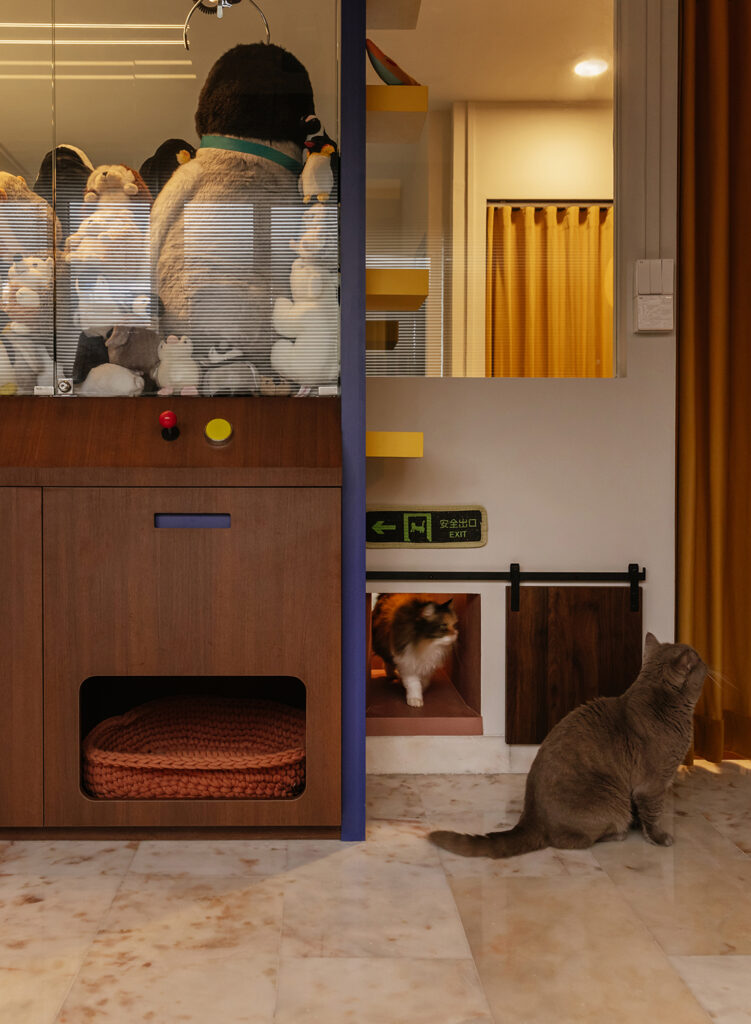
Design by Studio Luuseed · Photography by Finbarr Fallon
A dog bath with a massage shower — and tiles chosen for paw comfort
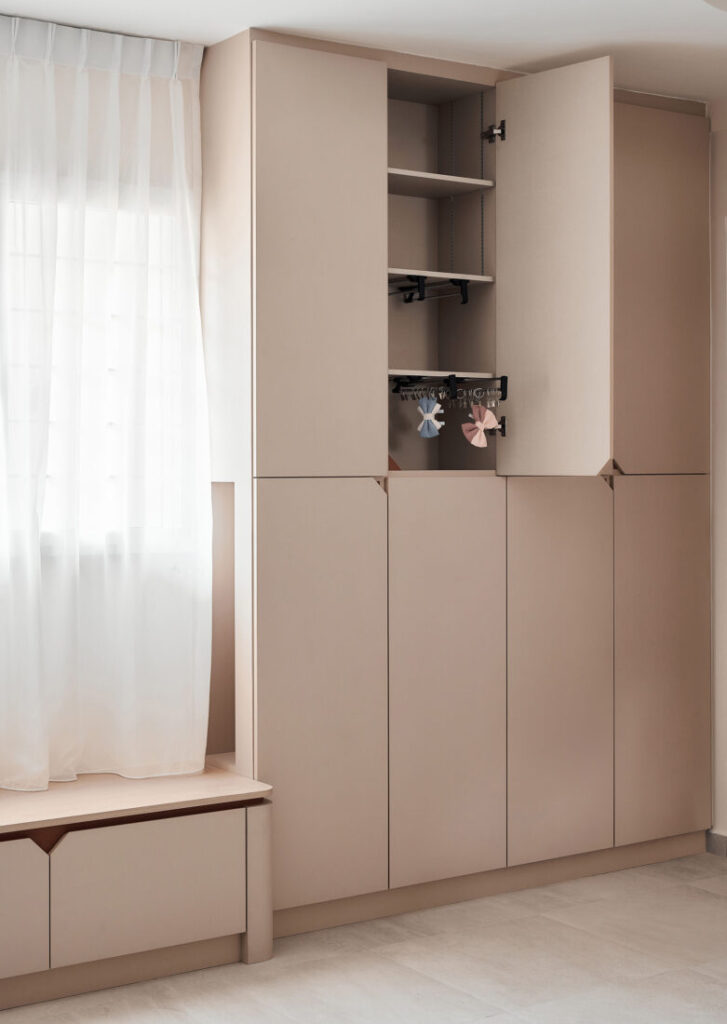
Hansel Studio’s renovation of this resale flat was driven by a single brief: a dog-centric home. Every tile is non-slip and scratch-resistant, chosen for grip without being abrasive on paw pads. The living room stays open, with modular furniture that clears aside for doggy playdates. A bespoke cabinet stores the dog’s bow ties and bandanas alongside the owner’s shoes. The centrepiece is a built-in dog bath in the kitchen with a hansgrohe DogShower — selected, the designers say, for its massage effect.
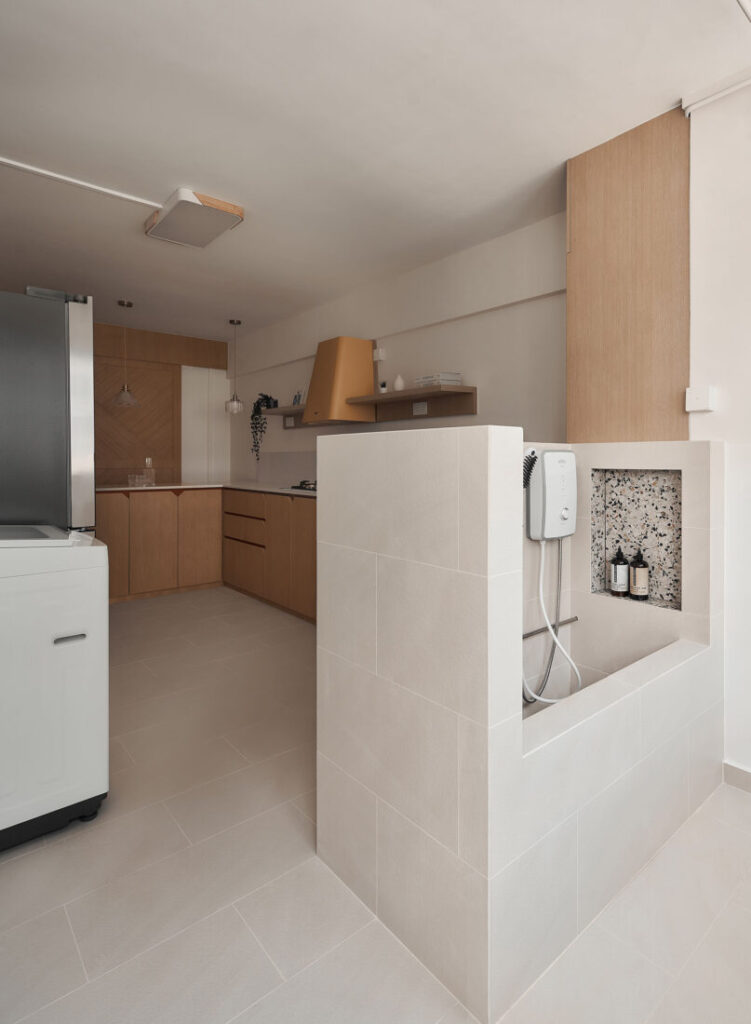
Design by Hansel Studio
Two dogs and a whole new floor plan
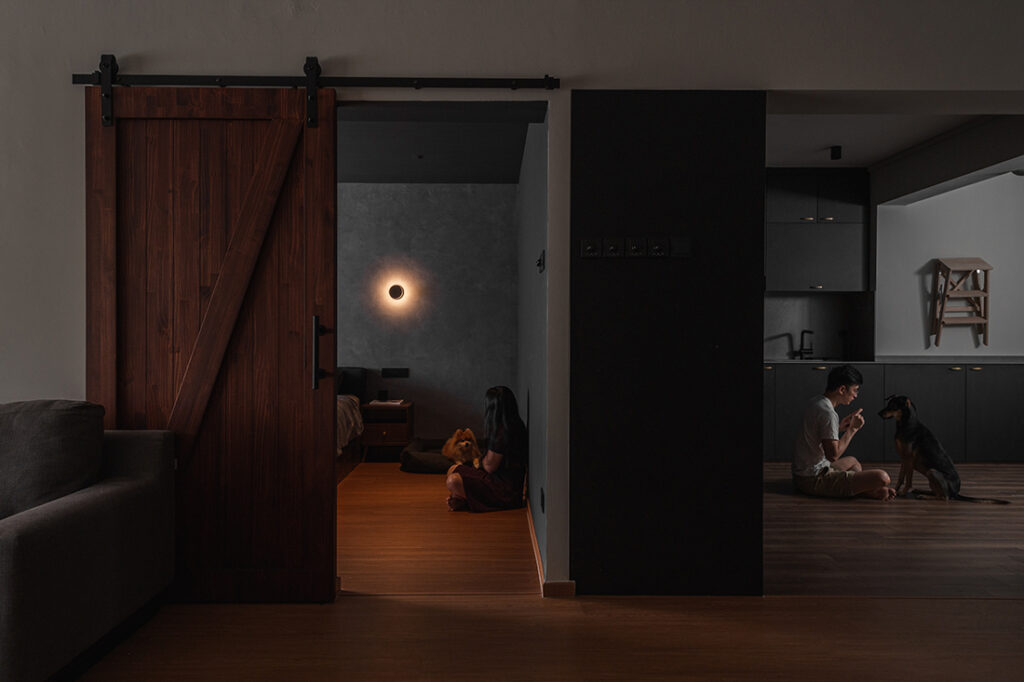
In this Bukit Batok flat, SG Interior Design reconfigured the entire layout around a couple and their two dogs. The master bedroom was enlarged for the dogs, the dining area relocated into the original bedroom, and the entryway transformed into a foyer with a designated dog-leashing zone. “They requested a space to leash the dogs before heading out, so we incorporated that into the layout,” says designer Lee Guang Rong.
Design by SG Interior Design
The quiet art of a cat flap and a corridor made for play
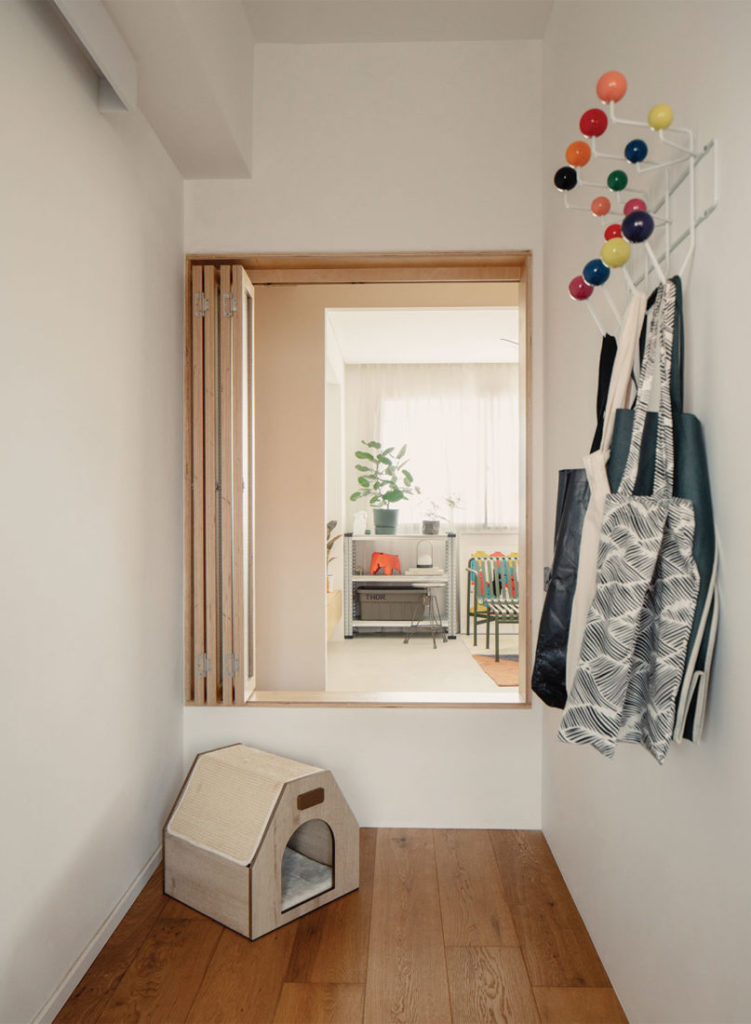
Architect Clifford See of LAR+D lives in this Bishan flat with his spouse and two cats. The home’s reimagined corridor doubles as a seating nook for reading and playing with the cats — a simple move that creates a human-pet zone without any obvious pet infrastructure. In a separate condo project, LAR+D integrated a quirky cat flap into the kitchen door: practical, almost invisible, and the kind of small intervention that makes life easier for everyone.
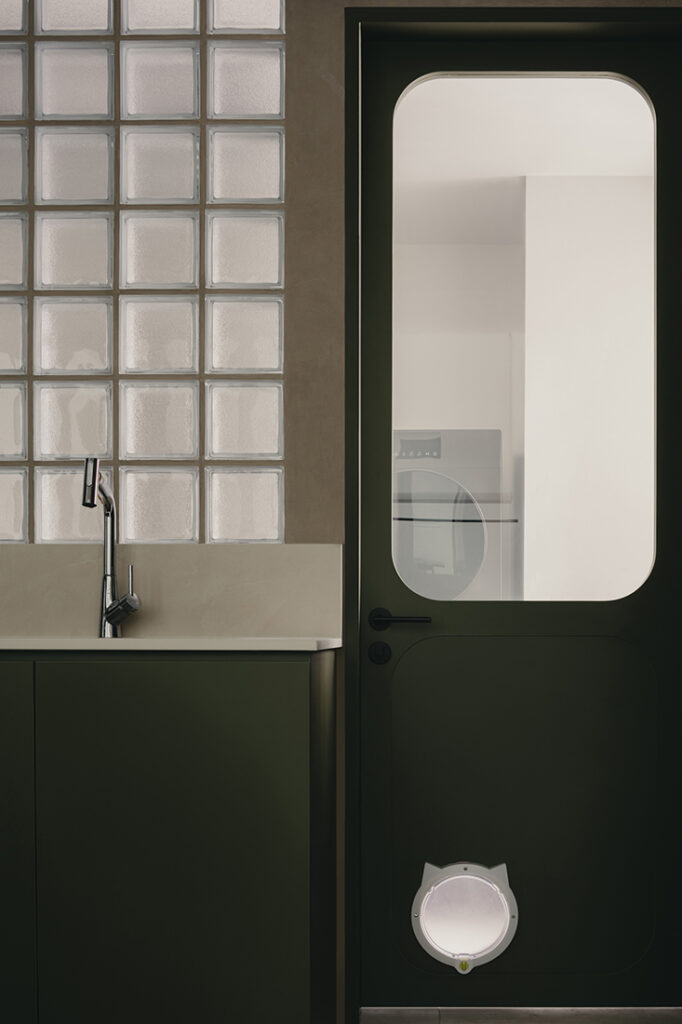
Design by LAR+D (Local Architecture Research + Design)
Good to know before you renovate
Under the Housing and Development (Animals) Rules 2024, HDB residents may keep up to two cats and one dog of an approved small breed per flat. Cats and dogs must be licensed through AVS’s Pet Animal Licensing System (PALS). Cat licensing is free until 31 August 2026, with lifetime validity for sterilised cats and renewable licences for unsterilised cats. For private premises, up to three cats or dogs, or a combination of both, may be kept per unit, though condominium by-laws may impose additional restrictions. For the latest rules, refer to NParks AVS.
We think you may also like Senior-friendly homes that don’t look like it
How to design a home that truly works for your pets