In Mo Ran · 墨染, a two-bedroom apartment styled by ButterHomes, Haley Tey shows how Chinese-inspired interiors can feel current and quietly layered — without relying on obvious motifs or heavy ornament.
Images: Project Mo Ran by ButterHomes
For homeowners drawn to Chinese-inspired interiors, the challenge is often how to make the style feel meaningful without turning the home into a theme. The phrase still tends to call up two familiar images. One is the traditional version: rosewood furniture, red lacquer, blue-and-white ceramics and landscape ink paintings — a look many associate with an older generation. The other is a more contemporary expression of opulence, with crystal chandeliers, oversized sofas and dramatic gestures.
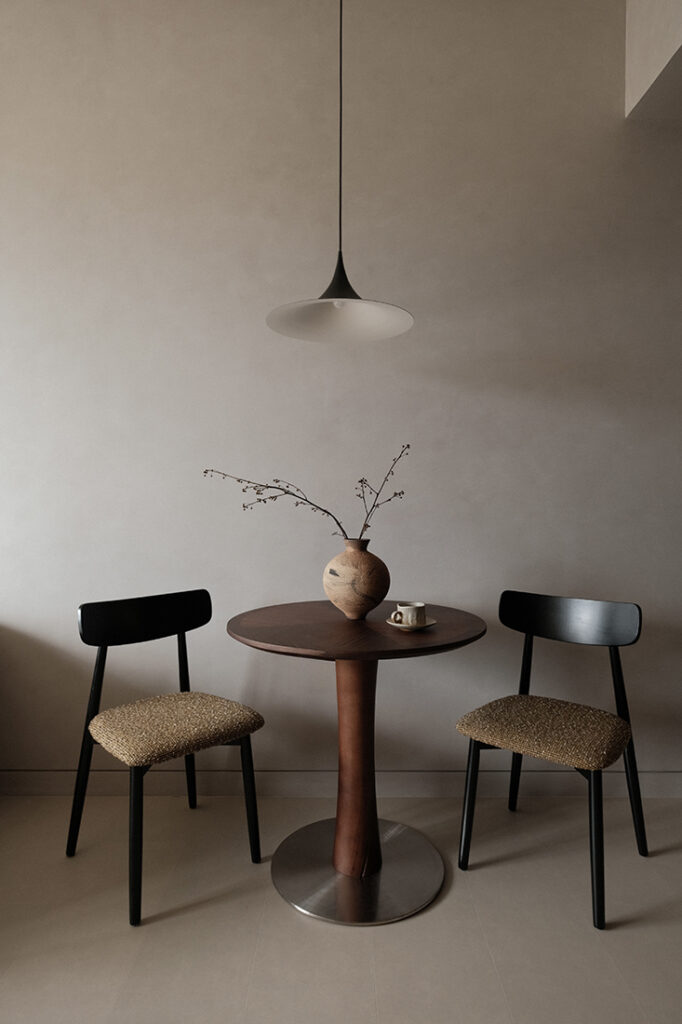
Mo Ran · 墨染 takes a different route. Styled by Haley Tey, founder of Singapore interior styling boutique ButterHomes, the two-bedroom apartment at The Highline Residence was created for a client deeply rooted in Chinese culture, but who wanted a home that felt modern rather than nostalgic or overly literal.
The name Mo Ran · 墨染 means “ink-dyed”, a reference to the textured wall and the softness of ink bleeding into paper — an immediate clue to its muted, layered mood.
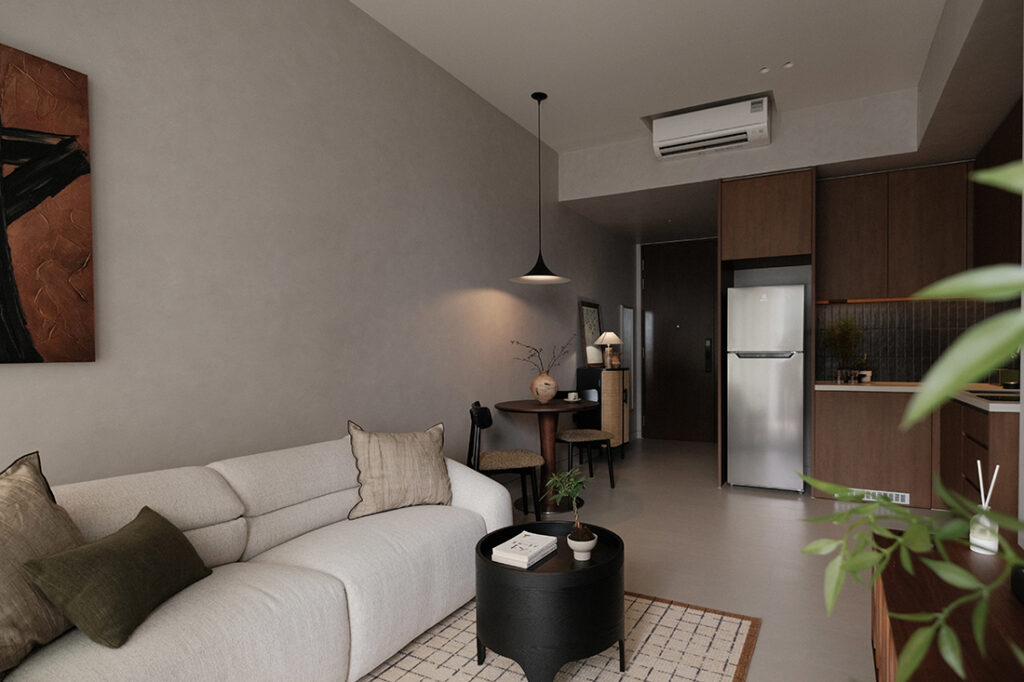
Chinese interiors, quietly interpreted
The starting point was Song Dynasty aesthetics: quiet, sophisticated and restrained. Instead of decoration that shouts for attention, the home takes its cue from muted colours, clean lines, sparse ornament and the idea of blank space, or 留白, as something precious rather than empty. As Haley puts it, “The sophistication is in the bones.”
Haley also introduced a wabi-sabi rawness through raw ceramics, dried botanicals and linen. These details add texture and depth without disrupting the quietness of the concept. The result is not a traditional Chinese interior recreated for today, but a softer interpretation shaped through colour, material and mood.
Beyond red, gold and ornament
In Mo Ran, Haley intentionally avoided literal Chinese silhouettes, calligraphy, traditional decorative symbols and anything too ornate. The goal was not to erase cultural reference, but to express it more subtly.
According to Haley, styling carried much of the home’s character because the apartment itself was a typical modern Singapore condo. “The Chinese soul came entirely through the layers we added,” she says.
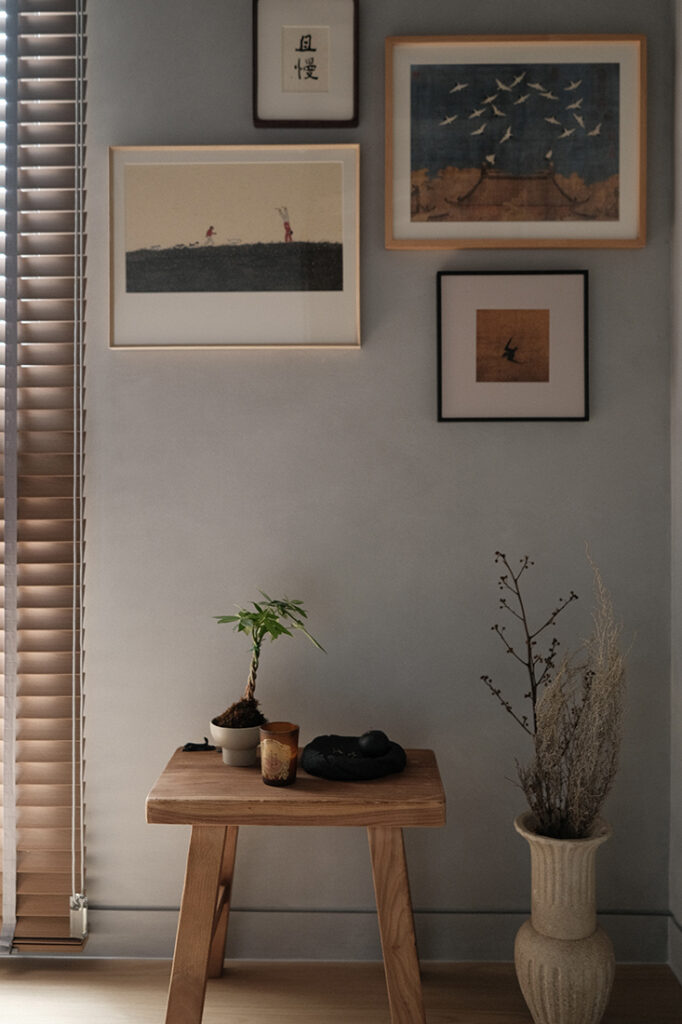
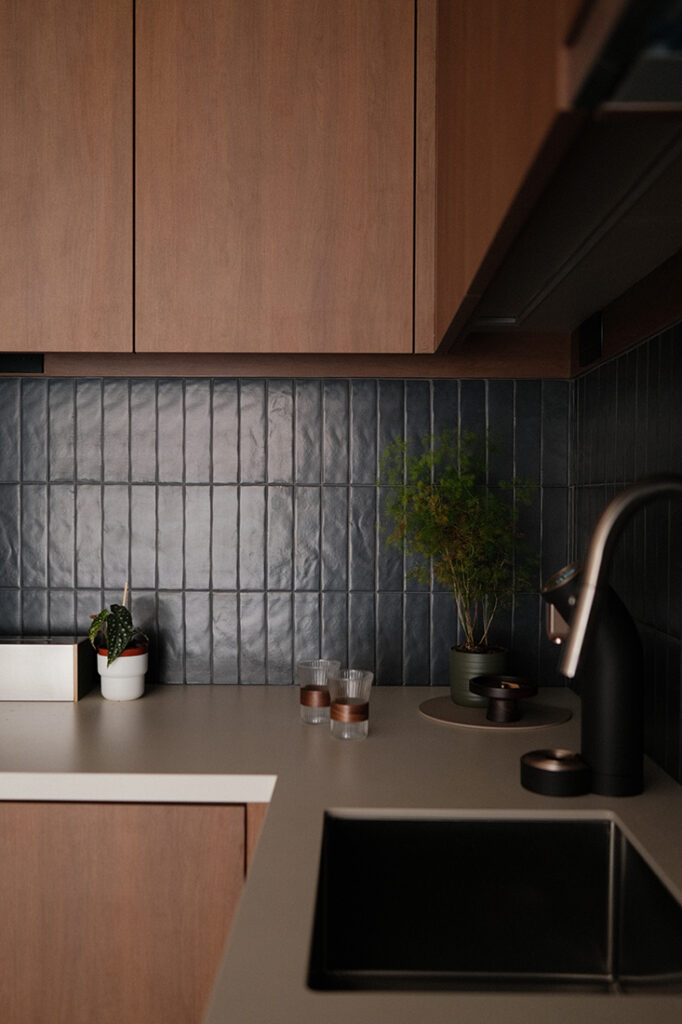
Those layers include the ink-stroke wall painting, small artworks in the study, raw textured pottery in the dining space, dry botanicals and the considered placement of every object. Part of the freshness comes from contrast too, with these Chinese and organic elements balanced against modern pieces: a chrome floor lamp, contemporary furniture silhouettes and a raw, unexpected blue kitchen backsplash.
Build from an ink-inspired palette
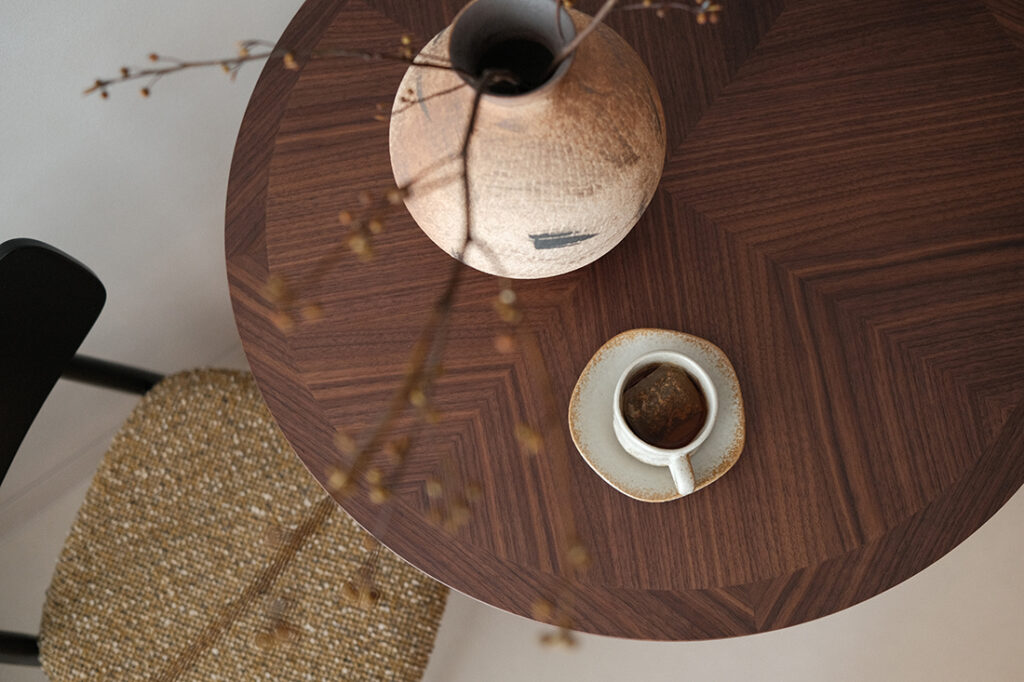
Colour is one of the easiest ways to reinterpret Chinese interiors for a modern home. In Mo Ran, the palette draws from nature rather than decoration: ink tones, neutrals, muted blue, soft green, walnut, linen and shadow.
For homeowners, muted tones can suggest ink, paper, stone or ceramic glaze without making the home feel themed. Haley’s advice is to avoid anything too bright or bold. Let the palette soften the room first, then build depth through texture.
Choose objects with meaning
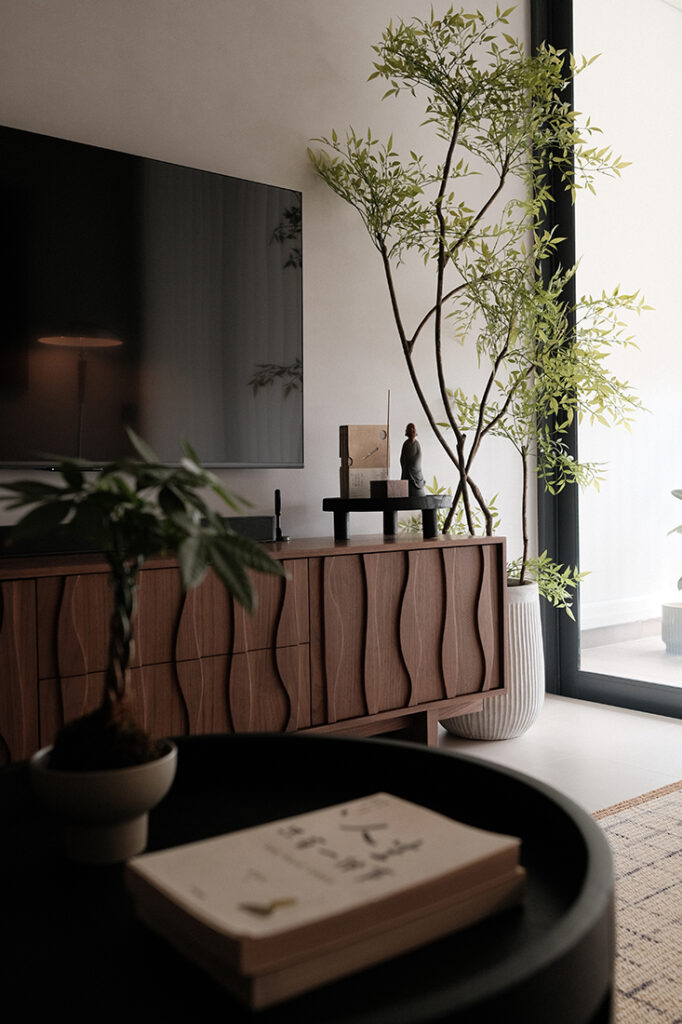
A modern Chinese-inspired interior does not need many decorative pieces. The stronger approach is to choose fewer objects that carry a sense of ritual, craft or memory.
Haley suggests buying for ritual, not just decoration. Books, incense burners and ceramics can bring the spirit of quiet, intentional living into a contemporary home naturally. In Mo Ran, raw pottery, textured surfaces, dried stems and unexpected greenery add a tactile quality that makes the space feel lived-in rather than simply styled.
Let blank space do the work
One of the most homeowner-friendly ideas from Mo Ran is also one of the hardest to practise: knowing when to stop.
Blank space is not unfinished space. In this home, it allows the walls, art, wood and ceramics to breathe, while preventing the Chinese references from feeling too heavy or thematic. Haley’s advice is simple: don’t over-decorate. Let furniture rest, let walls remain blank, and allow some surfaces to be quiet.
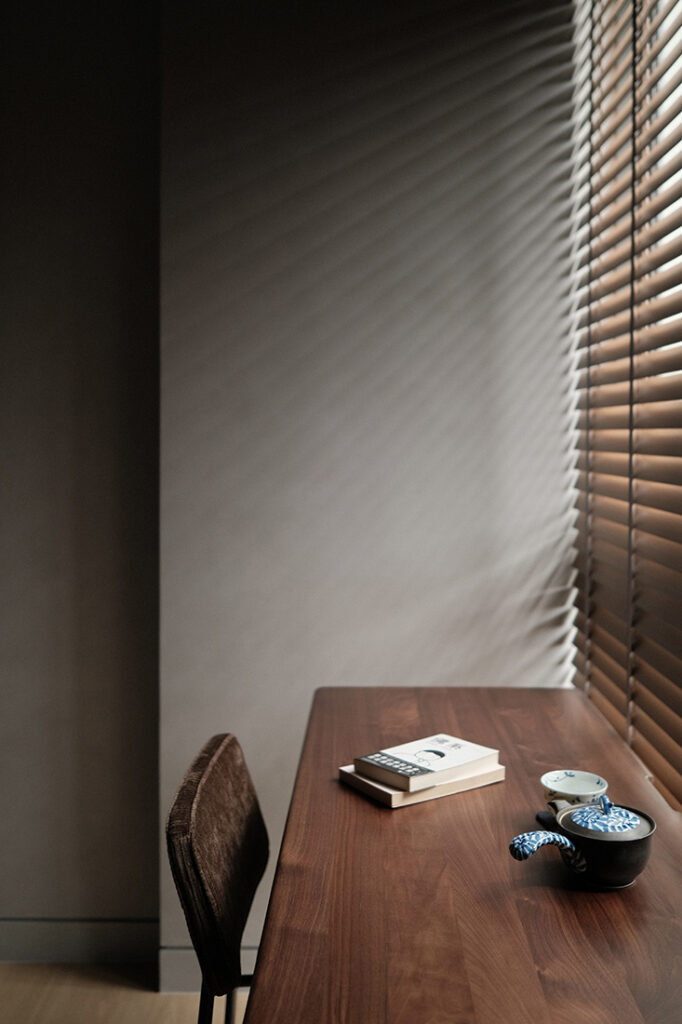
The Nook captures this idea well. Created as a place for conversation and intimate moments within the apartment, it reflects the Song Dynasty appreciation for stillness, tea and reflection.
Start small at home
The appeal of this approach is that it does not require a full renovation. Homeowners can begin through styling alone: a more muted palette, a few tactile objects, softer light and more considered placement.
Sheer blinds can filter natural light and create a diffused atmosphere. A raw ceramic piece can bring texture to a simple interior. A small reading or tea corner can introduce ritual into everyday life.
What matters most is avoiding the pull of the obvious. As Haley’s approach suggests, Chinese-inspired does not have to mean Chinese-themed. At its best, it can be subtle, personal and quietly expressive.
We think you may also like Organic Modernism: Where clean lines meet natural warmth in Singapore homes
Chinese interiors today: Styling ideas for modern homes