In pursuit of timeless living at Sentosa Cove
description
When Lawrence Puah, Design Director of akiHAUS Design Studio first encountered the corner terrace house at Sentosa Cove, he felt the front entrance was underwhelming for a home of this scale. “It was more like a back entrance than an arrival space,” he shares, noting how the long corridor downplayed the sense of entry one would expect, particularly for homeowners who enjoy hosting.
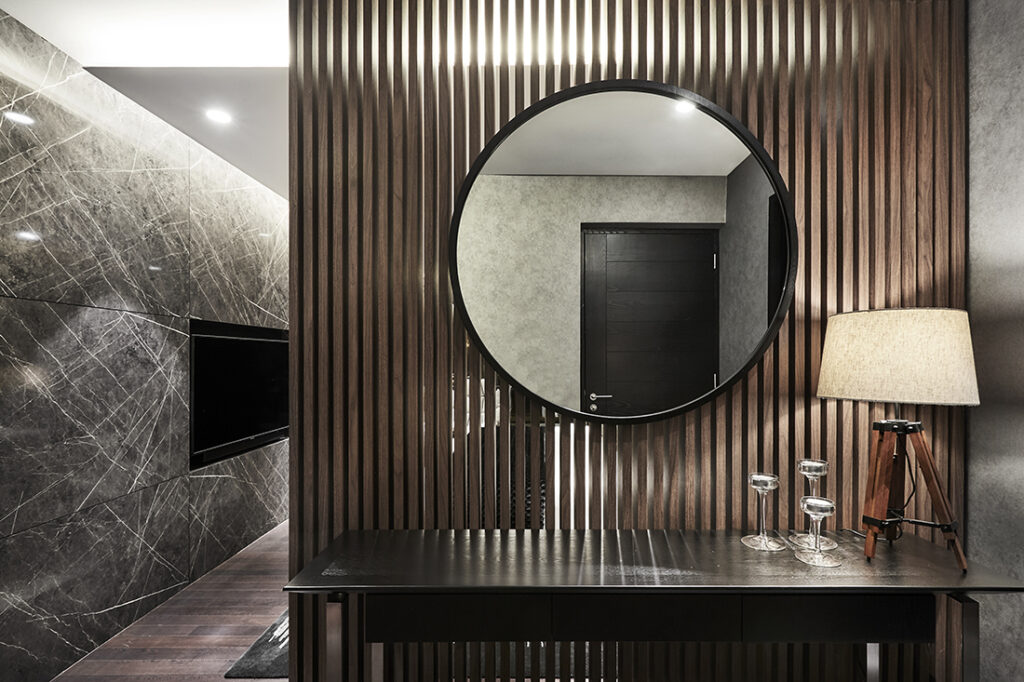
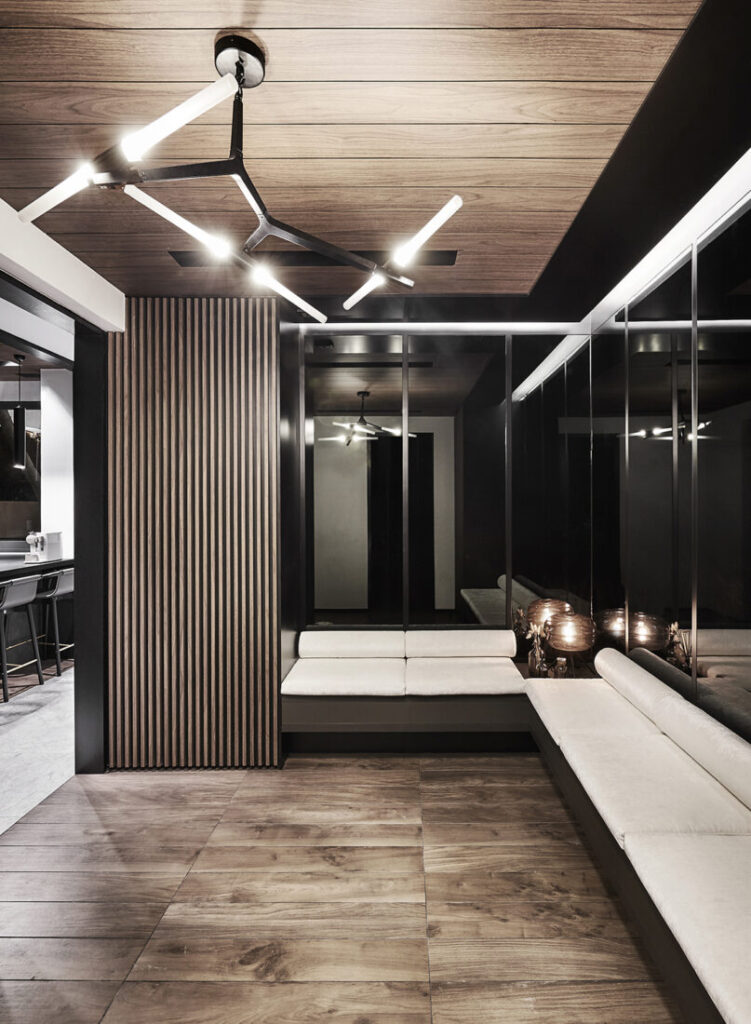
In response, the ground floor has been reconfigured to give the home a more deliberate sense of arrival. The former kitchen has been transformed into a foyer with plush built-in seating, creating a welcoming layout that flows naturally into the living and dining areas.
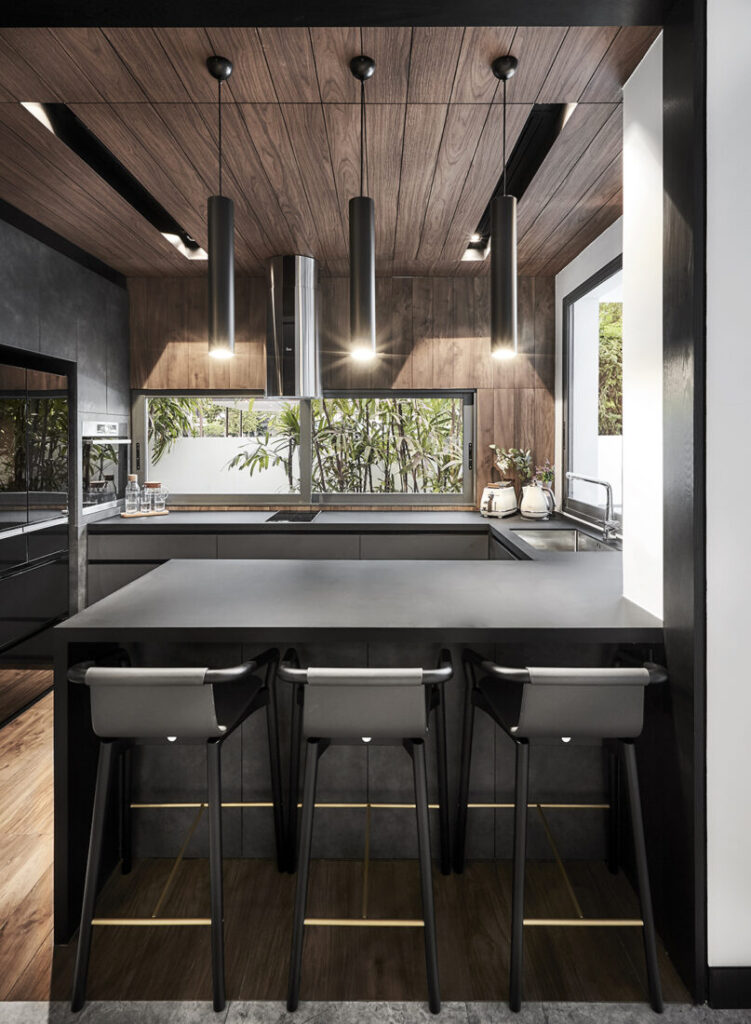
Formerly a guest room, an adjacent space has been reworked into a dry kitchen and bar positioned along the main circulation path, while supporting the home’s entertaining flow. Dark wood-patterned tiles line the walls and ceiling, wrapping the space in warmth while providing a durable, easy-care finish.
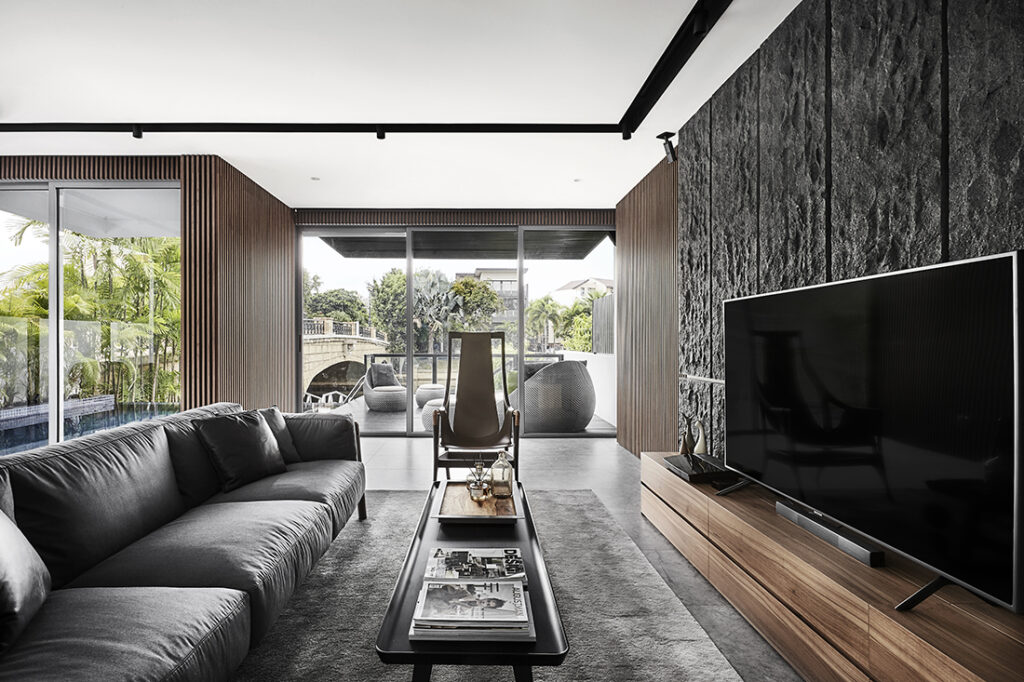
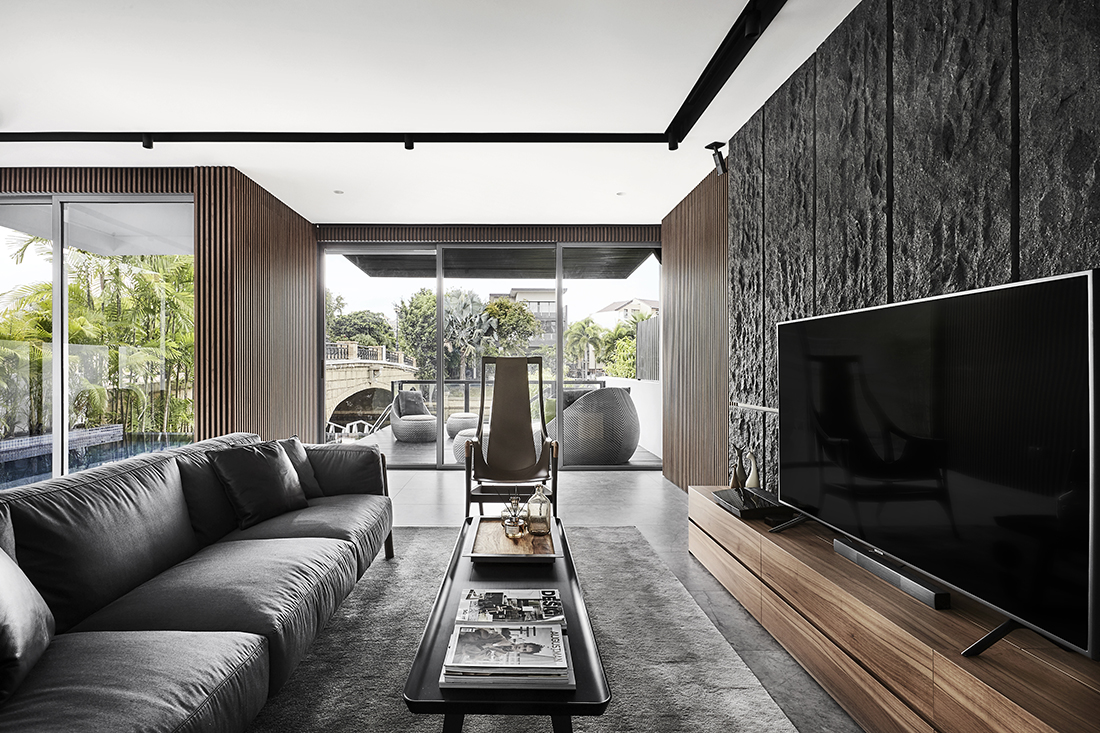
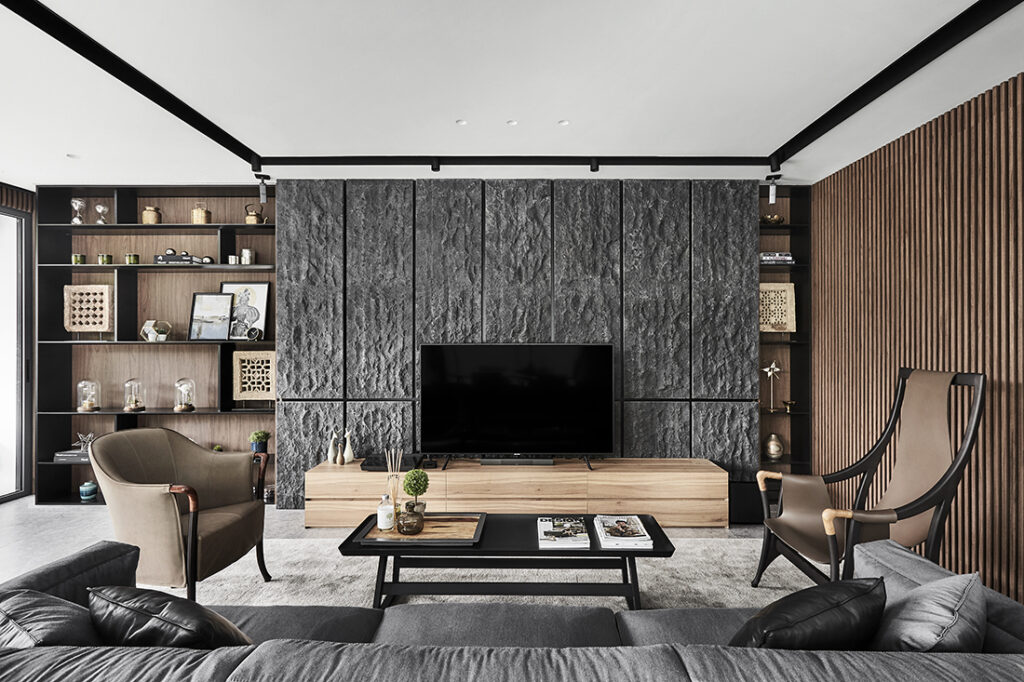
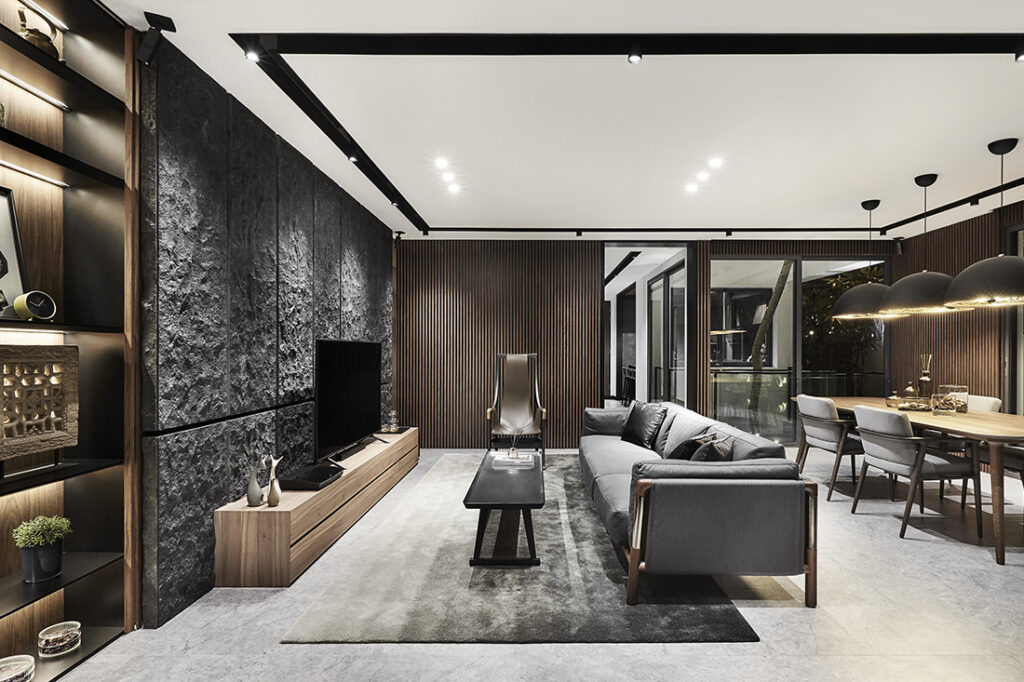
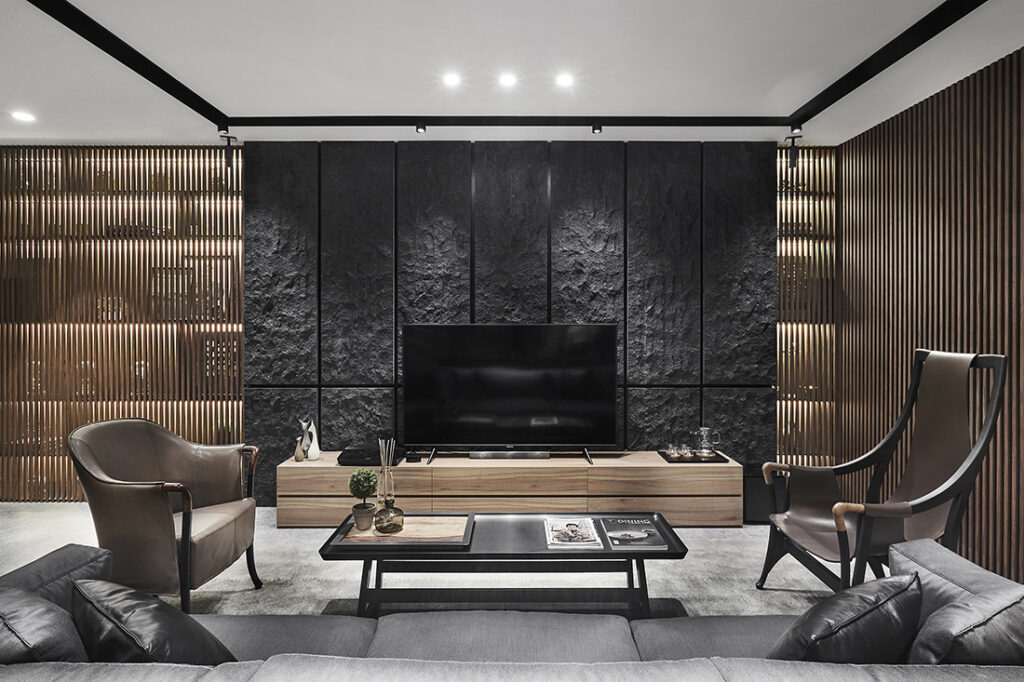
Entering the main communal spaces, the living area is anchored by a rough-cut granite feature wall from RICE, which sets the tone for the home’s material language. Formed using individual stone slabs, the bold yet tactile wall acts as the centrepiece of the space.
“From the front, it looks like thick slabs of stone,” Lawrence explains. “But the side profile is much slimmer than it appears, allowing the sliding timber panels to disappear seamlessly behind it.” He adds that breaking the wall into slabs rather than forming it as a single, solid piece was intentional. “A full slab would feel staggering. Using individual slabs keeps the scale more human and inviting.”
Flanking the stone feature, timber lattice doors slide away to reveal backlit display shelves, introducing a subtle layer of flexibility. When closed, the wall reads as a sculptural backdrop; when opened, it softens the space with light and display.
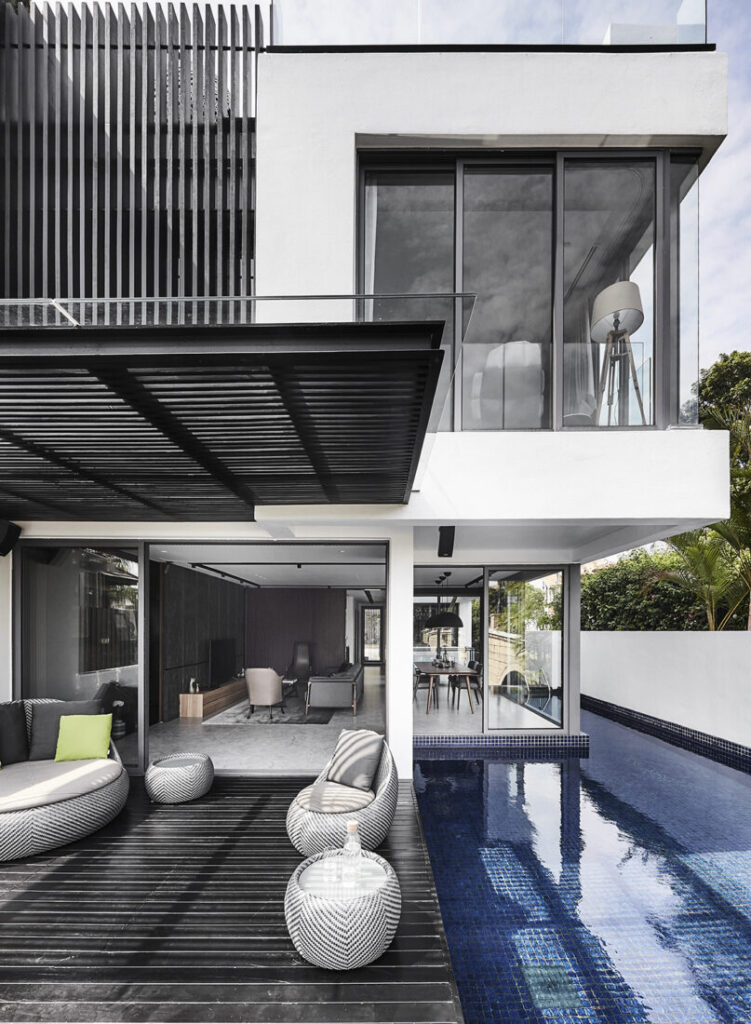
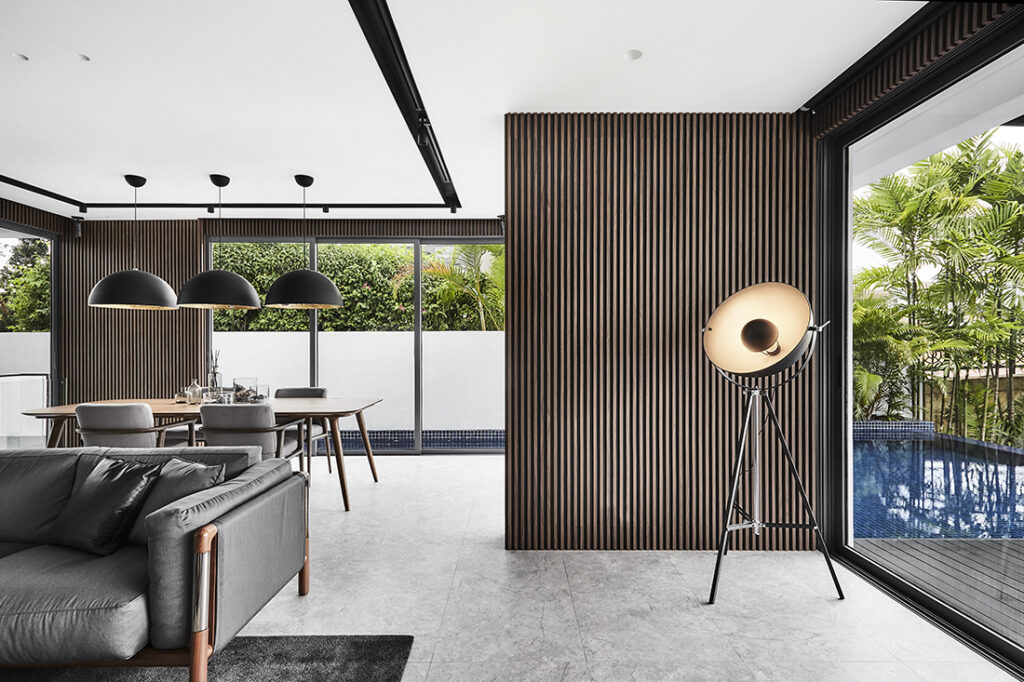
The dining space is also framed by fluted walnut timber strips and stone-patterned tiles, chosen for both appearance and longevity. Well-suited to Sentosa Cove’s humidity, sunlight and salty air, the materials create a setting that feels relaxed yet robust, supporting both daily family life and hosting.
That adaptability became increasingly important as the home shifted from vacation use to everyday living. “The home was originally intended as a holiday retreat, but it became a permanent residence once the family moved in with their parents and children,” shares Lawrence.
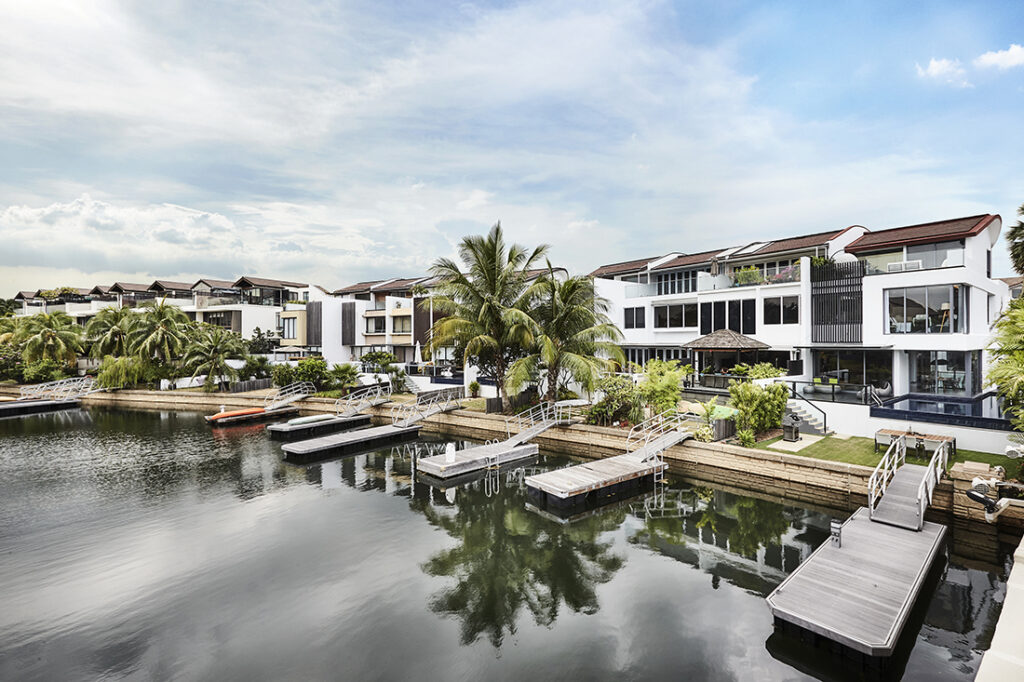
He adds, “It works because the spaces are easy to live in and maintain. Timber and stone are not just aesthetic choices here. They help manage humidity and wear in this waterfront property with a private pier at the back.”
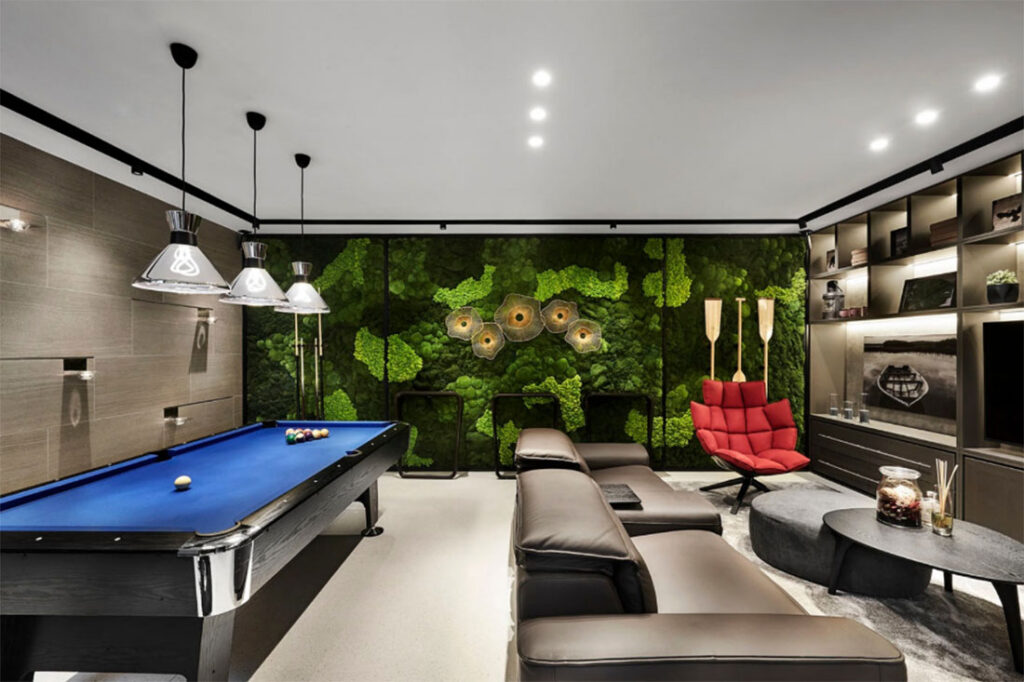
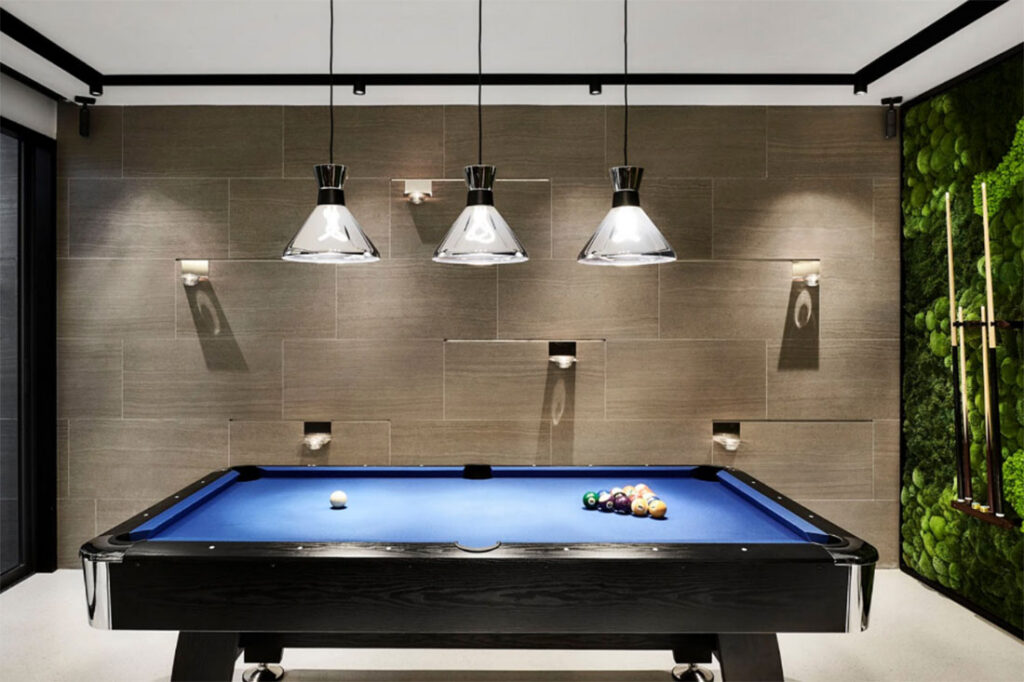
Designed to be largely self-sufficient, the home incorporates a range of amenities that support everyday living and entertaining. The basement is conceived as an entertainment den, anchored by a moss wall that becomes the defining feature of the space.
“Custom stainless steel brackets are built into the walls to hold tea lights, which adds a soft layer of ambient lighting,” says Lawrence. “The pool cues are stored upright against the moss feature wall to keep the space organised.”
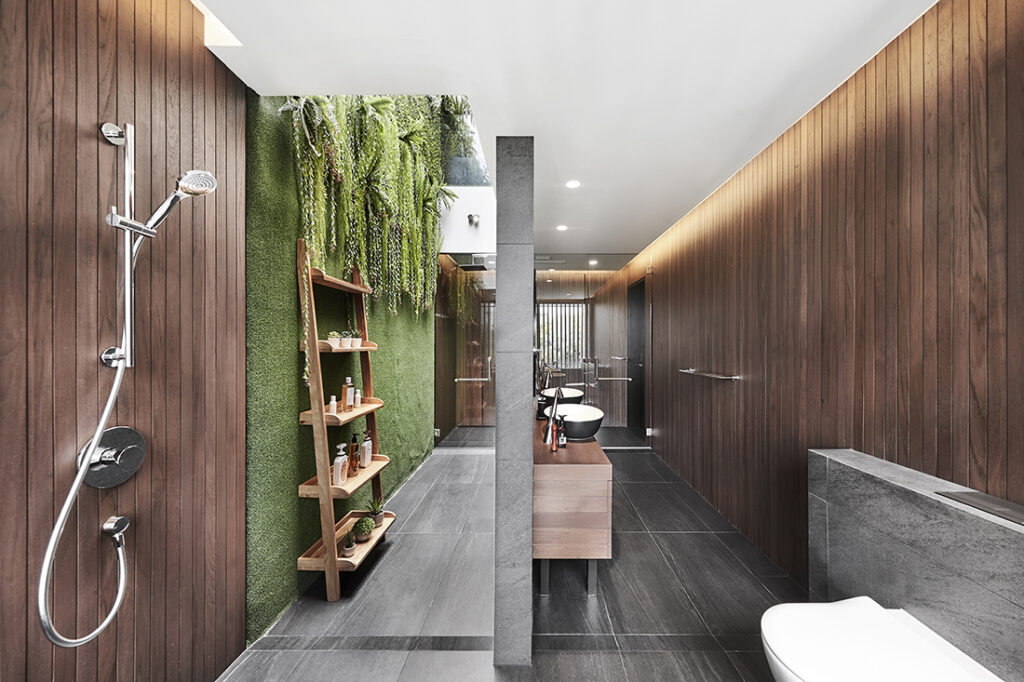
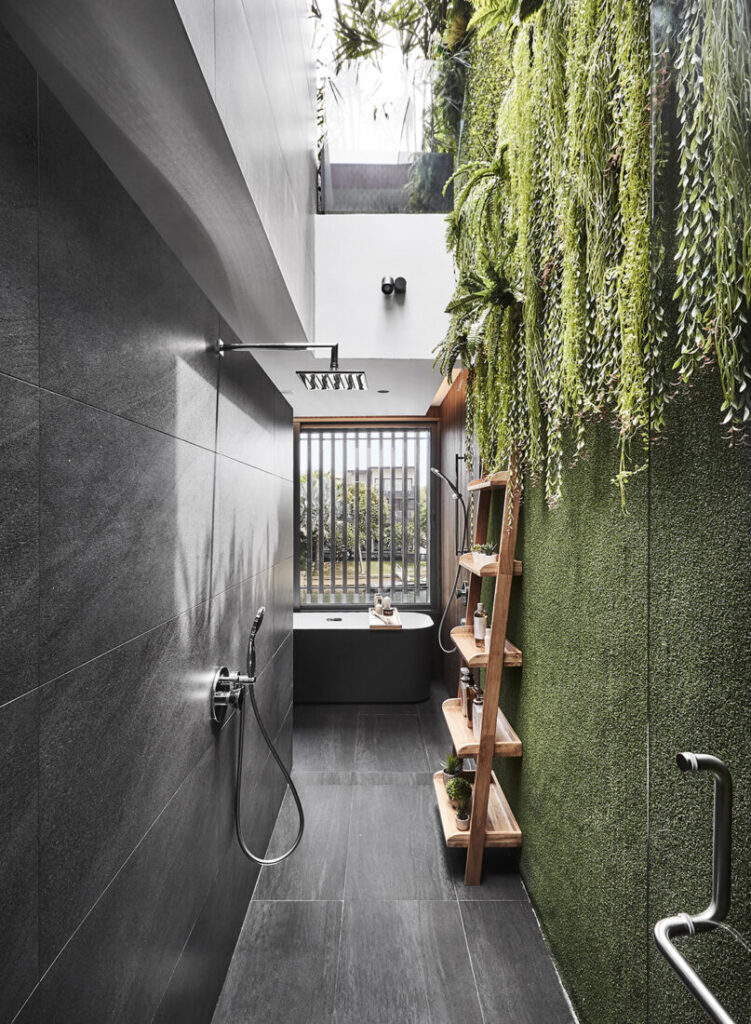
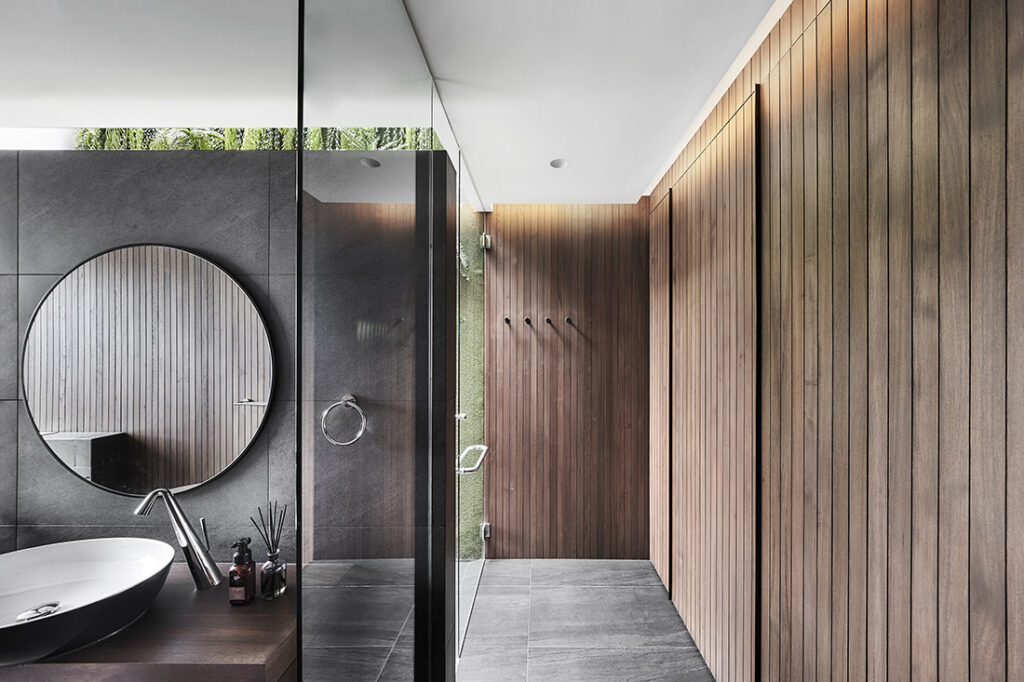
The moss feature wall in the basement is not a standalone gesture, but part of a broader approach that threads greenery through the home. It also appears in the master bathroom, where a vertical green wall forms the backdrop to an outdoor shower fitted with Gessi fixtures.
By placing an open-to-sky outdoor shower next to the garden wall, the area opens up to light and greenery, allowing the homeowners to enjoy an outdoor shower that feels connected to nature. A bathtub from Villeroy & Boch completes the spa-like setting.
“We placed the wardrobes right next to the master bathroom,” says Lawrence. “Because they sit so close to the wet areas, the wardrobes are finished in water-resistant wood panels. It helps handle humidity while keeping the space in tune with the home’s resort-like setting.”
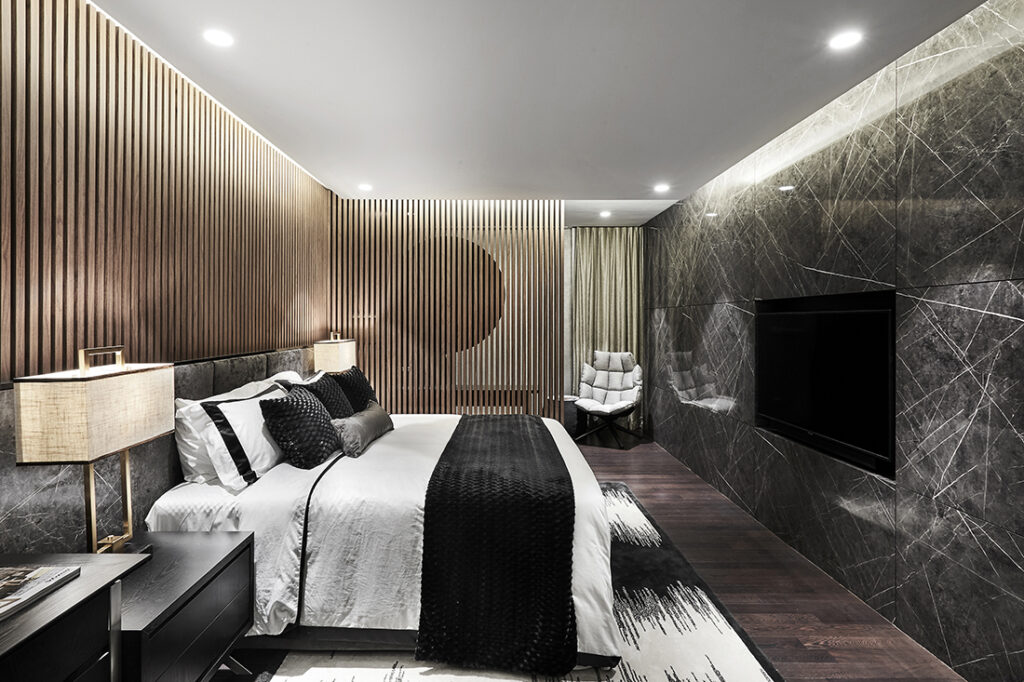
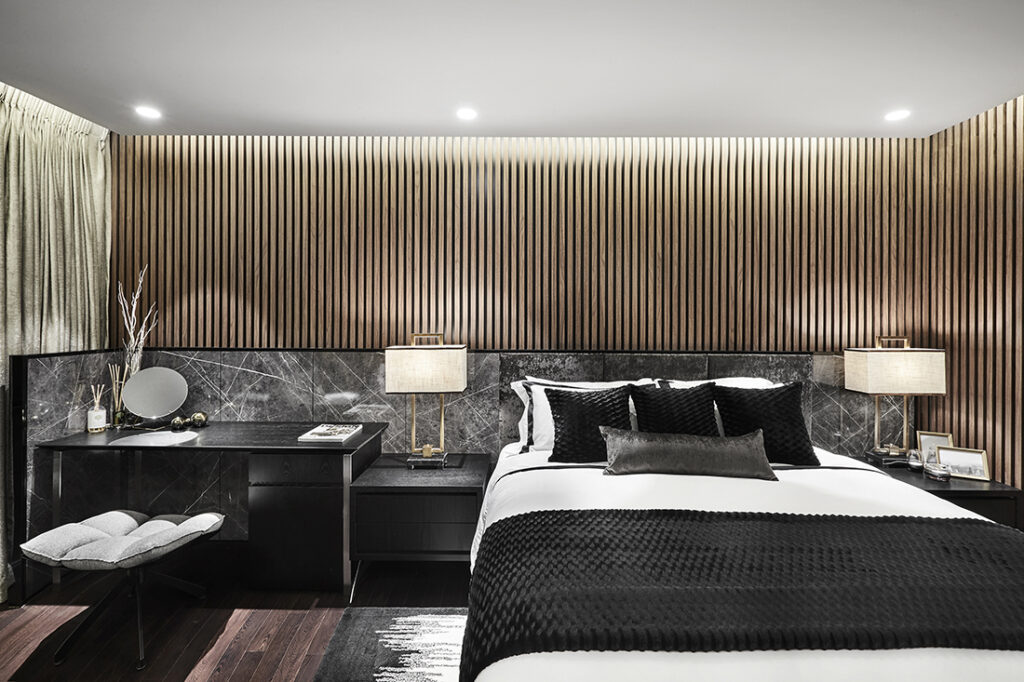
That same resort sensibility carries through into the master bedroom. “The room’s floor plan is quite elongated, so we introduced a timber slatted divider to create a foyer and to break up the length,” shares Lawrence.
Beyond the divider, the sleeping area shifts into a darker, more cocooning palette. Walls clad in dark, lustrous quartz surfaces bring depth and a sense of quiet luxury, while timber elements temper the richness of the marble-patterned material.
“We used reverse cove lighting for the ceiling feature,” says Lawrence. “It gently draws attention to the beautiful stone veining and wood textures, and helps conceal the ducted air-conditioning system for a cleaner overall look.”
Completed over nine months, the design and renovation by akiHAUS brings together timber, stone, and other enduring materials through deliberate planning and detailing, designed to age well within a coastal environment.
akiHAUS Design Studio
www.akihaus.com
www.facebook.com/akiHAUS.Design.Studio
www.instagram.com/akihaus.sg
We think you may also like A semi-detached house undergoes a nip and tuck
DETAILS
PROJECT GALLERY
PROJECT GALLERY
Bathroom
Bedroom
Facade
Foyer
Kitchen
Living Room
LATEST PROJECTS
Apartment
2000 SQFT
Opening up a Riversails penthouse for cooking, gathering and light
HDB
1000 SQFT
Inside an interior designer’s own Bidadari BTO
Landed
3112 SQFT
A family home defined by its giant roof
Landed
3240 SQFT
Under the canopy: A tropical house open to garden living
Apartment
1421 SQFT
Inside a Jadescape condo with a balcony zen garden
Landed